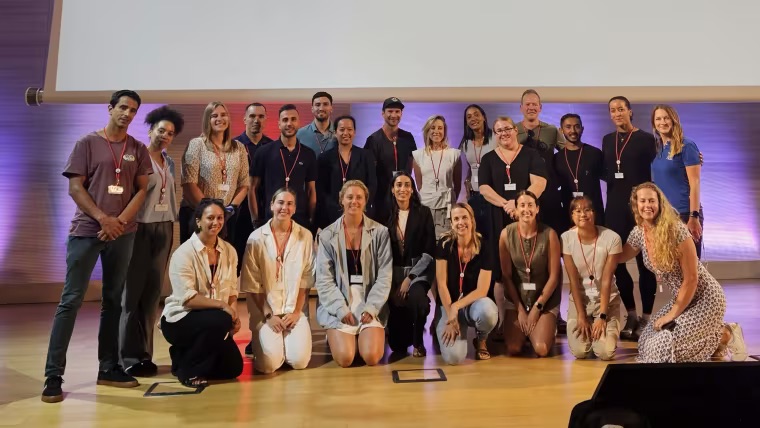
The Olympic Broadcasting Services (OBS) Broadcast Training Programme (BTP) is helping athletes make the jump to a new career and get hired in paid roles at the Olympic and Paralympic Games. Here’s how the latest cohort are getting on ahead of Milano Cortina 2026.
The OBS Broadcast Training Programme is a legacy initiative that offers hands-on broadcast training and the opportunity to join the Olympic Games broadcast operations team. Originally created for local students, the programme was expanded at Paris 2024 to include Olympians and Paralympians, who were given a unique opportunity to learn new skills and explore professional paths after their sporting careers.
Following the success of the first group, where 22 athletes joined the broadcast operations team for Paris 2024, the programme is now offering even more athletes the chance to take part at Milano Cortina 2026.
A total of 46 Olympians, Paralympians and elite athletes participated in the information session. Of that group, 24 were invited for in-person broadcast support training in Milan. During two days of lectures, they gained technical expertise and learned about the roles available to them.
With up to 30 athletes to be hired for Milano Cortina 2026, Grace Luczak, a two-time Olympic rower for the USA, was excited by the possibilities provided by the BTP.
“Learning about the technical side, the artistry of the people who pull together the magic that is the Olympic Games… it really opened my eyes to all of the opportunities behind the camera at the Games,” she says.
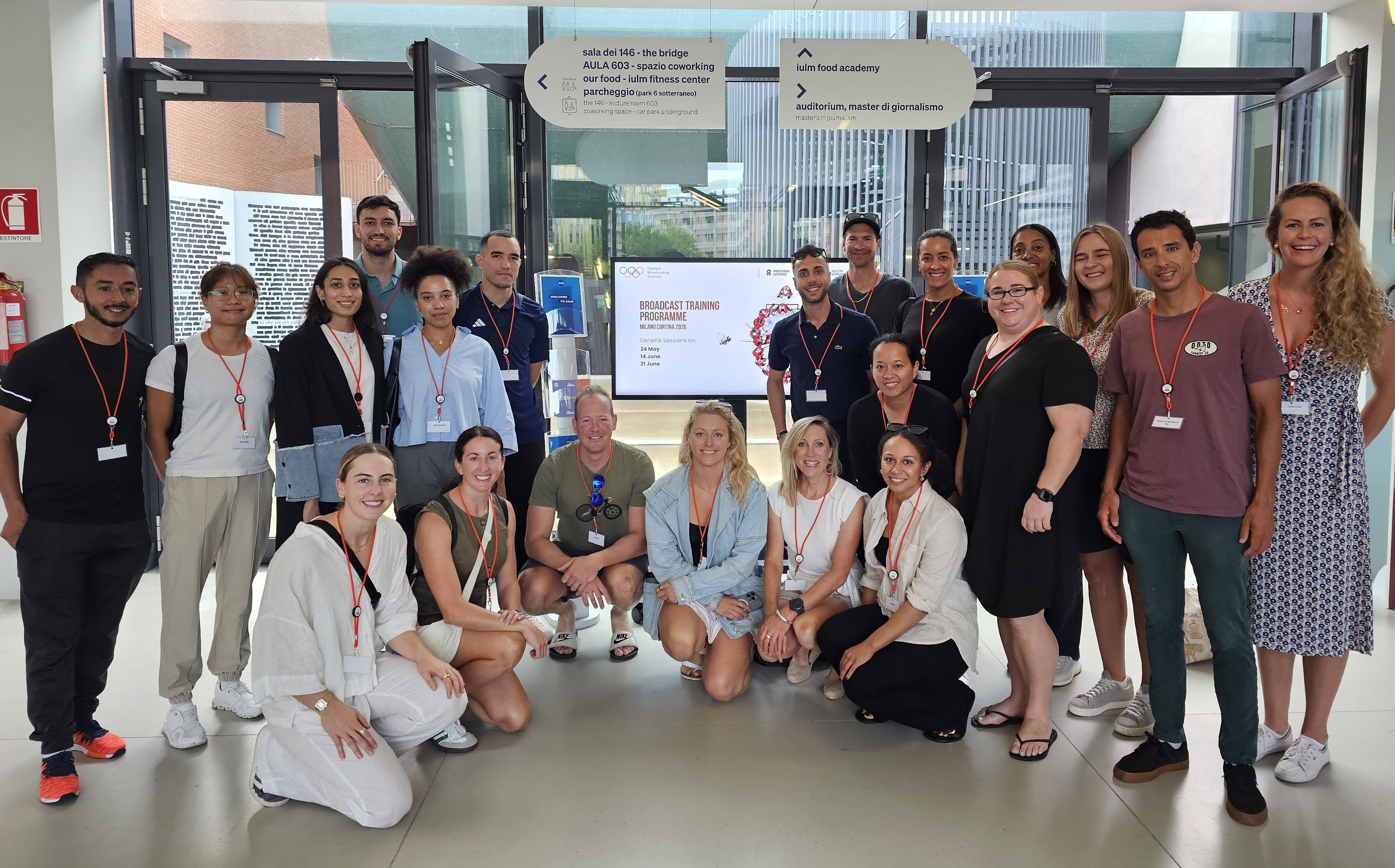
A look behind the scenes
Successful candidates will have the chance to take up one of two roles at Milano Cortina 2026.
As Liaison Officers, participants will assist broadcasters and act as a point of contact at the competition venue, helping to arrange live interviews.
Others will take on the role of Events Officers, working at the International Broadcast Centre to provide information to broadcasters and assist visiting VIP guests and official delegations.
For Yale Steinepreis, who competed for Australia in canoe sprint at Paris 2024, the training illustrated just how much work goes on behind the scenes.
“Understanding the sheer volume of people, food, staff, money, how much responsibility, how stressful it is behind the stage, everything that comes into it, makes it seem like the athletes have an easier job!” she says.
Inspiring the next generation
We know that there are few more special feelings than being part of the Games as an athlete, but the BTP allows you to get involved in a different capacity and contribute to the success of the Games for others.
“I think it’s a wonderful opportunity that Olympians can actually experience the Games in a different way and contribute in a positive manner to the next generation who are chasing their dreams,” explains Jean Spies, a two-time Olympic track cyclist for South Africa.
Starting a new journey
By giving you the skills to work behind the camera at the Games, the BTP is opening a path to a potential new career at Milano Cortina 2026 and beyond.
“Many athletes have knowledge about the Olympics and we may have done our studies, but we don’t have work experience,” says Jhon Alexander Castaneda, who competed for Colombia in the 20km race walk at Tokyo 2020. “This opportunity gives us the ability to develop in a professional setting and maybe get the attention of companies.”
Alicia Lucas, a gold medallist in rugby sevens for Australia at Rio 2016, believes that the BTP is a great opportunity for all those who are passionate about the Games.
“I think this opportunity will open so many doors for you and your career,” she says. “I think it’s a really vital thing if you want to stay involved in your sport or in the Olympics.”
Source: IOC
 GLITZ SPORTS XPRESS
Leave a comment